A wipe-down treats symptoms.
We treat the cause.
Each zone of a formal dining room accumulates a specific category of damage. Below, we name each one — precisely.
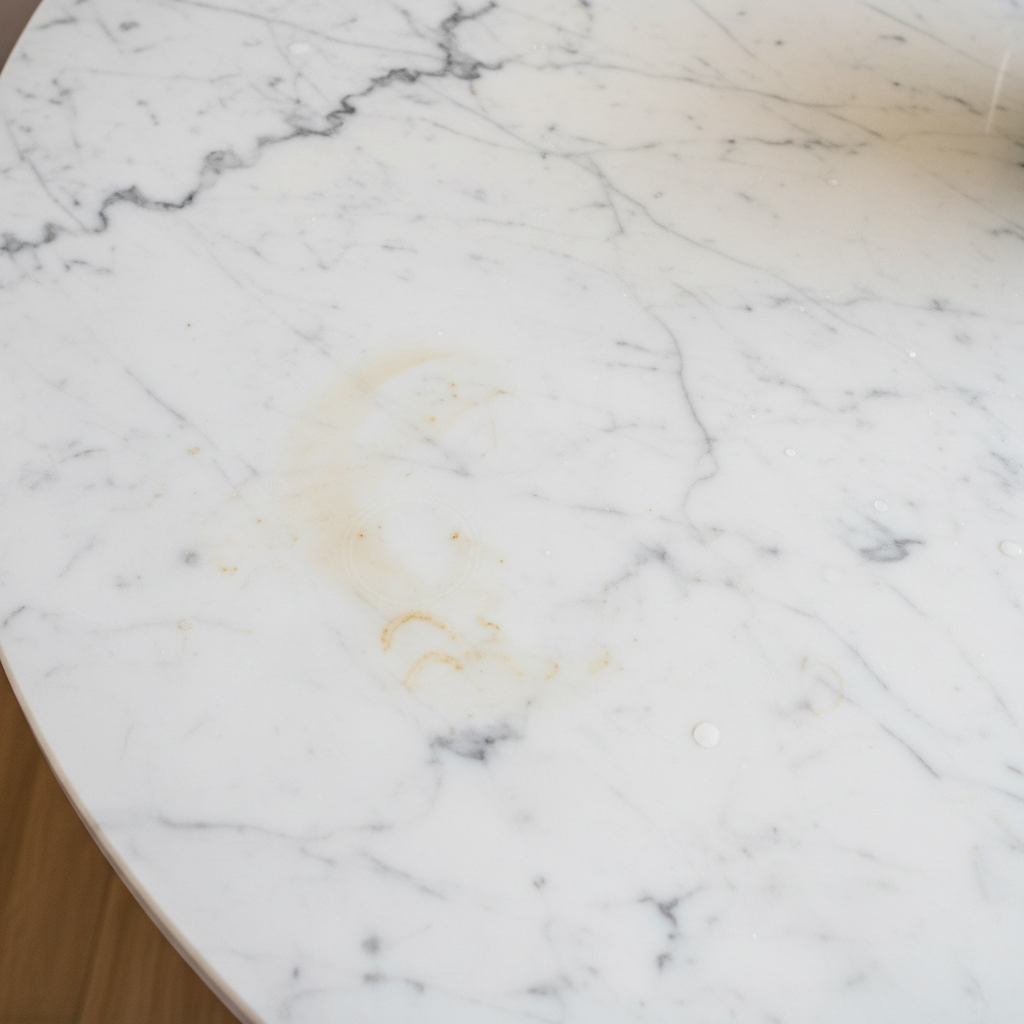
Tannin Migration in Marble
Red wine, black tea, and aged Bordeaux contain polyphenolic tannins that penetrate calcite crystal lattices within 90 seconds of contact. What appears as a surface stain is a subsurface mineral alteration. Standard cleaning agents cannot reach it. Abrasive removal destroys the polish. The correct protocol requires a poultice-draw method with pH-matched extraction fluid — a process that takes 6 hours and cannot be rushed.
Left unaddressed for 12 months, tannin migration becomes permanent discoloration. The marble requires repolishing at £800–£2,400 per panel.

Oxidation on Silver-Plate Fixtures
Chandelier crystals and silver-plate sconces accumulate a layered contamination over 18–24 months: first, airborne grease vapor from kitchen proximity deposits a lipid film. This film traps sulfur compounds from combustion (candles, gas fireplaces), catalyzing silver sulfide formation. The result is a yellowish-grey haze that reduces light output by 35–60% and signals neglect to every guest seated beneath it.
Silver sulfide penetration beyond 0.3 microns requires replating. At £180–£400 per fixture arm, a twelve-arm chandelier costs more to restore than to treat preventively for a decade.
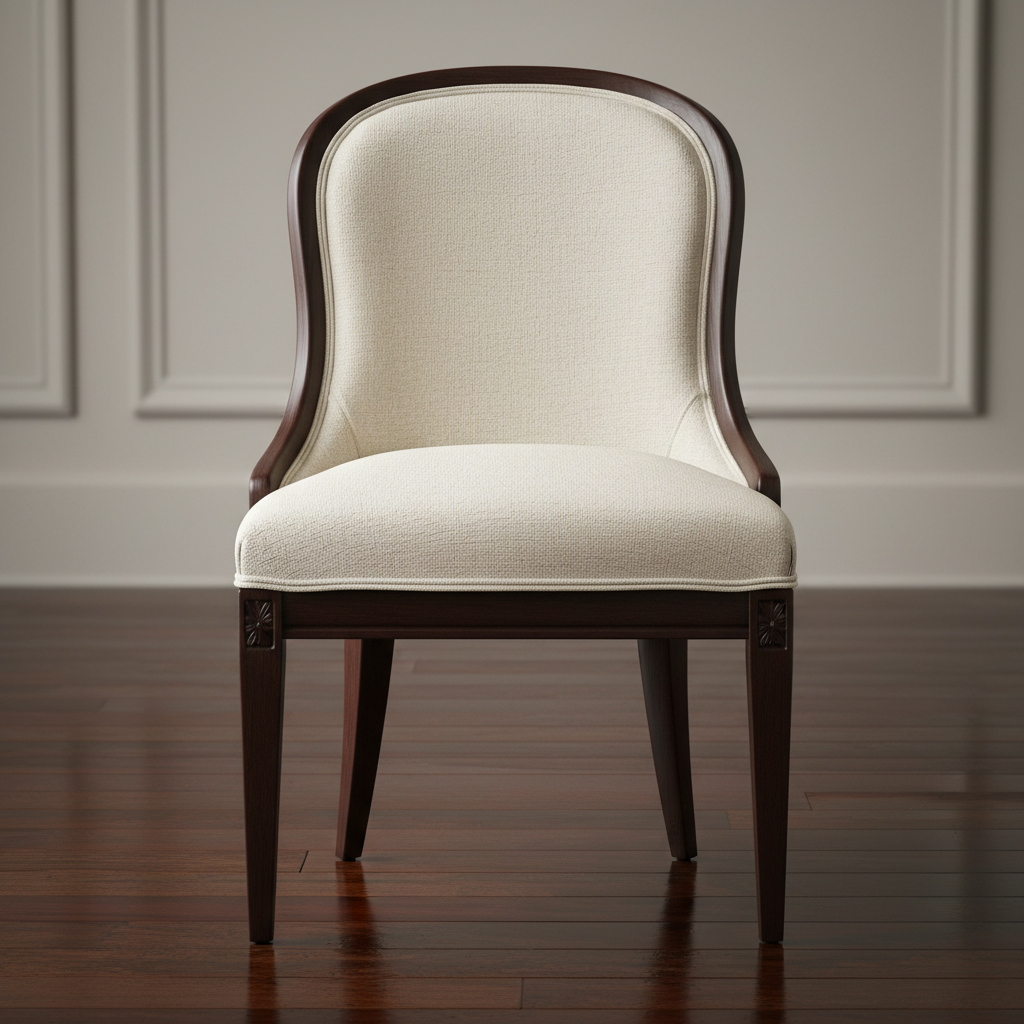
Fabric Fiber Compression from Repeated Seating
Linen, wool, and silk-blend upholstery on formal dining chairs undergoes progressive fiber compression after 80–120 seating cycles. The pile flattens, the weave opens, and the surface becomes porous — absorbing body oils, perfume compounds, and airborne kitchen particulate. Visually, the chair appears "worn." Structurally, the fiber interlocking that gives upholstery its resilience is failing. Steam alone resets surface appearance but does not address the subsurface contamination that accelerates degradation.
Reupholstering a set of eight formal dining chairs in matching fabric typically runs £3,200–£6,400. Preventive deep cleaning at 6-month intervals extends fabric life by 3–5 years.
Material-specific.
Never generic.
Every surface in a formal dining room has a different chemistry. We treat each one according to its material science — not a cleaning checklist.
Marble & Stone Surfaces
Calcite, travertine, limestone, granite
Tannin poultice draw · pH-matched neutralization · Micro-crystalline sealing · Polish restoration to 400-grit minimum
Crystal & Glass Fixtures
Leaded crystal, borosilicate, silver-plate
Ultrasonic bath at 40kHz · Electrolytic silver reduction · Anti-tarnish passivation · Reinstallation with cotton-glove handling
Formal Upholstery
Linen, wool blend, silk, brocade
Fiber-specific solvent injection · Low-moisture hot extraction · Pile restoration brushing · UV-stable deodorization
Hardwood & Parquet
Mahogany, walnut, oak, ebonized
Candle wax cryogenic removal · Micro-scratch buffing · Period-matched wax or oil finish · Grain direction restoration
The room speaks
before anyone sits down.
Our quarterly entertaining schedule doesn't allow for 'almost clean.' Gleam reset the dining room before our board dinner — the chandelier alone was worth the engagement. Three directors commented on it.
I prep four C-suite private dining rooms before every investor cycle. Gleam is the only service that understands what 'boardroom standard' actually means. They treated the marble, the upholstery, and the silver in a single overnight engagement.
Between a Michelin seating and the next cover, you have ninety minutes. Gleam's protocol for our dining room is the only thing that holds that window. The chair upholstery and table surface are reset to opening-night standard every time.
Professional assessment
isn't optional. It's overdue.
Five questions reveal what your dining room has been hiding. Each answer adjusts your condition score in real time.
Score Your
Dining Room
Five questions. Each one is a mirror. Your condition score adjusts in real time.
Primary table surface material?
Different materials require fundamentally different treatment chemistries.